Sirdar Group offers three distinct governance solutions, and it’s not always obvious which one fits your situation. This guide helps you understand the differences and choose the right path for your organisation.
A board evaluation assesses how an existing board is performing against governance best practices and the organisation’s specific context. It brings together the perspectives of all board members, identifies strengths and gaps, and provides prioritised recommendations for improvement. The evaluation is collaborative, not judgmental—it’s designed to help your board be more effective.
A board evaluation typically includes: comprehensive questionnaires customised to your governance context; individual confidential interviews with each board member; committee evaluation if your board has committees; Contribution Compass profiling to map director strengths and complementarity; a detailed report with findings and prioritised recommendations; a stakeholder presentation where findings are discussed and next steps agreed.
A readiness diagnostic is for organisations that don’t yet have a formal board—or have an informal one—and want to understand how to implement effective board governance. It helps you design a board structure that fits your context, clarify decision rights, define board composition, and build a governance roadmap.
You need a readiness diagnostic if: you’re entering a new market or period of rapid growth and need formal governance to manage risk and opportunity; you’re planning a succession (founder to next generation, or leadership transition) and need governance structures that can survive the transition; your organisation has experienced a crisis and you need to build formal governance to prevent recurrence; you want to adopt a more formal governance posture as your organisation matures; you’re preparing for investment or external stakeholder involvement and need clear governance in place; you’re a family business designing structures that clarify decision rights and reduce family conflict.
A readiness diagnostic typically includes: scoping conversations with founder/leadership to understand governance needs; interviews with key stakeholders about governance priorities; an assessment of current governance readiness; recommended board structure and charter; recommendations for board composition and director selection; an implementation roadmap with timeline and next steps.
A board performance diagnostic is for organisations that have an established, active board and want to understand how to take board effectiveness to the next level. It’s more targeted and strategic than a full evaluation, focusing on specific performance drivers and gaps.
You need a performance diagnostic if: you want to assess strategic alignment between the board and the executive team; you’re focusing on specific board capabilities (e.g., risk oversight, financial acumen, market knowledge); you want to understand how the board interacts with executive leadership and where alignment could improve; you’ve recently added new board members and want to ensure they integrate effectively; you want to optimise board time allocation across strategy, risk, compliance, and oversight; you want a pulse-check on board effectiveness without the full scope of a comprehensive evaluation; your board is mature and you want to identify where the board could provide more strategic value.
A performance diagnostic typically includes: focused interviews with board members and executive leadership on specific governance themes; assessment of board-management interface and decision-making dynamics; analysis of how board time and attention is allocated; a focused report with targeted recommendations; sometimes a brief presentation or debrief conversation.
Yes. Some organisations sequence engagements: Start with a readiness diagnostic if they don’t have a board, implement the recommendations, and then conduct a board evaluation once the board has been in place for a year. Others conduct a full board evaluation, and later (once improvements are embedded) conduct a performance diagnostic to understand what’s next. Think of these as different tools for different moments in your governance journey.
A scoping conversation is the best way to decide. Call us and describe your situation: your board structure, your governance challenges, your timeline, and what you’re trying to achieve. We’ll listen, ask clarifying questions, and recommend the right solution. There’s no pressure—scoping is a conversation, not a commitment.
A board should have been in place for at least a year, meeting regularly, and dealing with substantive governance issues. If your board has been meeting for less than a year or is still finding its rhythm, a readiness diagnostic might be more useful to get the fundamentals right.
It’s possible, though less common. A readiness diagnostic is designed for organisations without formal boards. If you have a board that’s functioning but you want to redesign its structure, a hybrid approach might work: evaluate how the current board is performing, then use those insights to redesign the structure. A scoping conversation will help us recommend the best path.
Board evaluation: 4–8 weeks (depending on board size, complexity, and stakeholder availability). Readiness diagnostic: 3–4 weeks. Performance diagnostic: 2–4 weeks. Timelines can be accelerated if stakeholders are available and the scope is clear.
This is smart. You can begin with a readiness diagnostic to establish governance structure, then later conduct a board evaluation to assess performance. Or you can start with a performance diagnostic focused on one area (e.g., strategy) and expand to a full evaluation later. Let’s discuss your timeline and priorities in a scoping conversation.
Explore detailed information on each solution: board evaluation, board readiness diagnostic, board performance diagnostic. Learn about cost drivers and timelines for each engagement. Contact Sirdar Group to start a scoping conversation.
Mauritius
+230 463 7000
mauritius@sirdargroup.com
Level 8, Nexteracom Tower III, Rue du Savoir,
Cybercity, Ebene, 72201
Ghana
+233 246 386 364
ghana@sirdargroup.com
4th Floor, Stanbic Heights
215, North Liberation Road
Airport City, Accra
Kenya
+254 110 006 888
kenya@sirdargroup.com
1st Floor, Cornerstone Place,
23 St Michael’s Road (off Rhapta Road),
Muthangari, Nairobi
Western Australia
+61 482 026 914
australia@sirdargroup.com
Perth
New Zealand
+64 21 242 9383
newzealand@sirdargroup.com
Wellington
Nigeria
+234 803 595 7198
nigeria@sirdargroup.com
1 Walter Carrington Crescent,
Victoria Island, Lagos, Nigeria















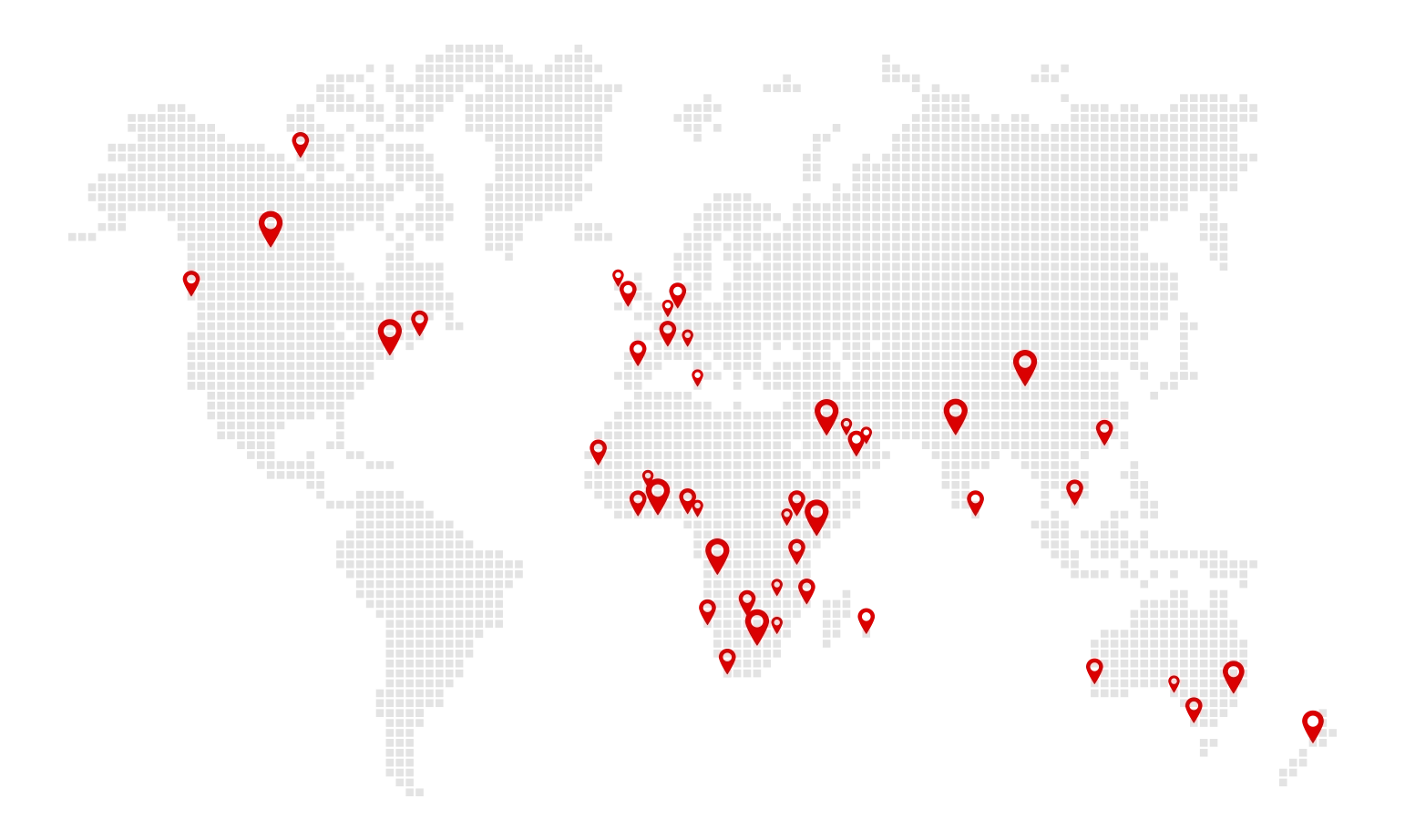



Australia Ghana Kenya Mauritius New Zealand Nigeria South Africa Tanzania
For more information contact us on info@sirdargroup.com
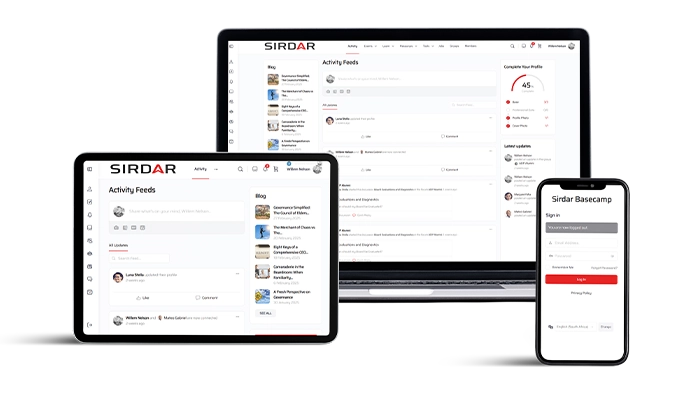
Sirdar Basecamp is the ultimate membership platform for boards and directors, designed to empower you with the tools, knowledge, and support you need to excel in governance. With Sirdar Basecamp, you gain access to expertly curated resources, practical frameworks, and a vibrant community of peers who are as dedicated to excellence as you are.

Enjoy optimal performance by leveraging our solutions to create meaningful economic impact. The result: satisfied shareholders, engaged employees, thriving communities and a better world for all.
Rely on us to support finding the ideal candidate who balances unique boardroom dynamics while bringing the required expertise, experience, values, and natural energy to deliver exceptional performance.
Gain critical insights and learnings from our relevant and practical training programmes and workshops that focus on building director- and board-level skills – all based on our robust methodology.
Navigating the complexities of statutory compliance is crucial for any business. Our comprehensive statutory compliance solutions simplify the process and cover every aspect of business administration.
Businesses that are experiencing growth encounter unique opportunities and challenges. Our solutions support ensuring good governance and best practices to take them further into the future.
Board training is key to remaining relevant and being a high-performing director. Our training and workshops are based on your specific and unique needs.
Stay future-ready by aligning today’s governance with tomorrow’s opportunities. Our case studies, job listings and blog help your board respond now and lead with foresight.
At the end of the day, directorship is about creating value and leading your organisation to success. The stakes are high, but you don’t have to do it alone. Reach out and gain a support system that empowers you to lead with confidence.


Cape Town
South Africa
+27 21 276 0540
Johannesburg
South Africa
+27 21 276 0540
Dar Es Salaam
Tanzania
+255 78 614 2424
Ebene
Mauritius
+230 463 7000
Accra
Ghana
+233 246 386 364
Nairobi
Kenya
+254 110 006 888
Wellington
New Zealand
+64 21 242 9383
Perth
Western Australia
+61 482 026 914
Lagos
Nigeria
+234 803 595 7198
Sirdar Basecamp is the ultimate membership platform for boards and directors, designed to empower you with the tools, knowledge, and support you need to excel in governance. With Sirdar Basecamp, you gain access to expertly curated resources, practical frameworks, and a vibrant community of peers who are as dedicated to excellence as you are.