When boards face crisis, transition, or uncertainty, governance discipline is either an asset or a liability. Weak governance in crisis breeds panic, conflicting decisions, and stakeholder confusion. Strong governance—even simple governance—creates a framework for sound decisions when information is incomplete and stakes are high. Sirdar supports boards navigating pressure by clarifying roles, frameworks, and decision authority when emotions are elevated.
CEO or Founder Departure: With unexpected departure of the chief executive or founder (resignation, health crisis, disciplinary action), the board suddenly needs to manage immediate business continuity, interim leadership, stakeholder communication, eventual succession. Weak governance stalls while clear governance (clear chair authority, decision rights, communication protocols) enables rapid response.
Hostile Market Conditions: Rapid market contraction, sector disruption, customer loss, and supply chain failure mean that decisions need to be made fast: cost reduction, product pivot, strategic shift. Boards without clear decision frameworks debate indefinitely. Clear frameworks enable agility.
Regulatory Investigation or Compliance Crisis: Breach of regulation, customer complaint, tax exposure, labour dispute. The board suddenly needs to oversee crisis response, engage external advisers, manage regulatory engagement, control narrative. Confused governance creates exposure; clear governance limits it.
M&A Transition: Post-acquisition or merger, the board needs to manage integration, cultural alignment, stakeholder expectations. The acquirer’s board and the acquired company’s board may have different governance cultures. Clarity about decision authority prevents integration paralysis.
Rapid Restructuring: Downsizing, closing divisions, pivoting business model. These decisions are stressful, emotionally charged, and legally complex. Clear governance (clear authority, clear communication channels, clear accountability) supports disciplined decisions.
Stakeholder Conflict: Disagreement between founders and investors, tensions between majority and minority shareholders, conflict between chair and board. Governance discipline—clear decision rights, documented processes, external mediation if needed—helps resolve conflict without board paralysis.
In normal times, boards operate with adequate information, sufficient time, and manageable stakes. Governance is deliberative. Under pressure: decisions happen faster (sometimes within hours instead of days), information is incomplete (missing facts), stakes are existential (closure, insolvency, reputational damage), and emotional intensity is elevated (fear, anger, self-protection). Weak governance systems collapse under pressure. Strong governance creates a safe container for high-stakes decisions.
A governance diagnostic during pressure provides: (1) Objective external perspective – an independent view of what’s working and what’s not, when internal dynamics are charged, (2) Clarity about which governance mechanisms are functioning and which are failing – answers questions like “are decisions being made or are we stuck?”, (3) A practical framework for decision-making – clarity about who decides what, limiting endless debate, (4) Stakeholder communication support – helping the board communicate coherently to investors, staff, regulators. Sirdar’s support becomes an external reference point for governance discipline when the internal compass is spinning.
Under pressure, the chair’s role becomes critical and visible. A strong chair: maintains meeting discipline, prevents conflict from derailing decision-making, ensures accountability for decisions, communicates consistently to the board and stakeholders, knows when to bring in external support. Chair coaching or interim chair support is often valuable during crisis. The chair is responsible for maintaining governance discipline precisely when it’s most needed.
Some boards under pressure benefit from: (1) Interim independent director – bringing external perspective and breaking board deadlock, (2) Interim chair – if the current chair is part of the conflict, an interim chair can re-establish governance discipline, (3) Governance adviser – working with the board to clarify decision authority and process, (4) Executive coach – supporting the CEO or leadership team through transition. These are temporary interventions that help a board navigate pressure and return to stability.
South African boards face specific pressures: economic cycles and currency volatility affecting financial stability, regulatory escalation (SARS, CCMA, sector regulators), BEE transformation pressures and societal expectations, infrastructure constraints affecting operations, climate risk and water scarcity in water-dependent sectors. Boards navigating these pressures need governance discipline. Our experience includes supporting boards through economic downturns, regulatory investigations, and major leadership transitions.
1. Can an evaluation be done during a crisis?
Yes, with modifications. A full board evaluation requires reflection and is difficult in acute crisis. A focused diagnostic—what’s working, what’s broken, what needs immediate attention—can be completed rapidly and provides immediate value. A full evaluation can assess longer-term impacts post-crisis.
2. How do you maintain confidentiality when the board is under scrutiny?
Carefully. Confidentiality is contractually protected and legally essential. We conduct interviews individually, prepare reports for the board only (not leaked to staff or external parties), and maintain clear boundaries between our engagement with the board and external stakeholders. If regulatory authorities request information, we advise the board and comply with legal obligations.
3. What’s the role of an interim board member?
An interim director joins the board temporarily to break deadlock, provide external perspective, strengthen governance discipline, or manage a specific phase (crisis response, integration, leadership transition). They have full fiduciary duty while in role but with a defined exit date. Interim directors are valuable when internal board composition is conflicted.
4. How quickly can governance support be mobilised?
We typically mobilise within 5 business days. Initial engagement can begin within 48 hours in genuine emergency. A focused diagnostic can deliver findings and recommendations within 1–2 weeks. Full evaluations take 4–6 weeks. For acute crisis, speed is a core service.
Mauritius
+230 463 7000
mauritius@sirdargroup.com
Level 8, Nexteracom Tower III, Rue du Savoir,
Cybercity, Ebene, 72201
Ghana
+233 246 386 364
ghana@sirdargroup.com
4th Floor, Stanbic Heights
215, North Liberation Road
Airport City, Accra
Kenya
+254 110 006 888
kenya@sirdargroup.com
1st Floor, Cornerstone Place,
23 St Michael’s Road (off Rhapta Road),
Muthangari, Nairobi
Western Australia
+61 482 026 914
australia@sirdargroup.com
Perth
New Zealand
+64 21 242 9383
newzealand@sirdargroup.com
Wellington
Nigeria
+234 803 595 7198
nigeria@sirdargroup.com
1 Walter Carrington Crescent,
Victoria Island, Lagos, Nigeria














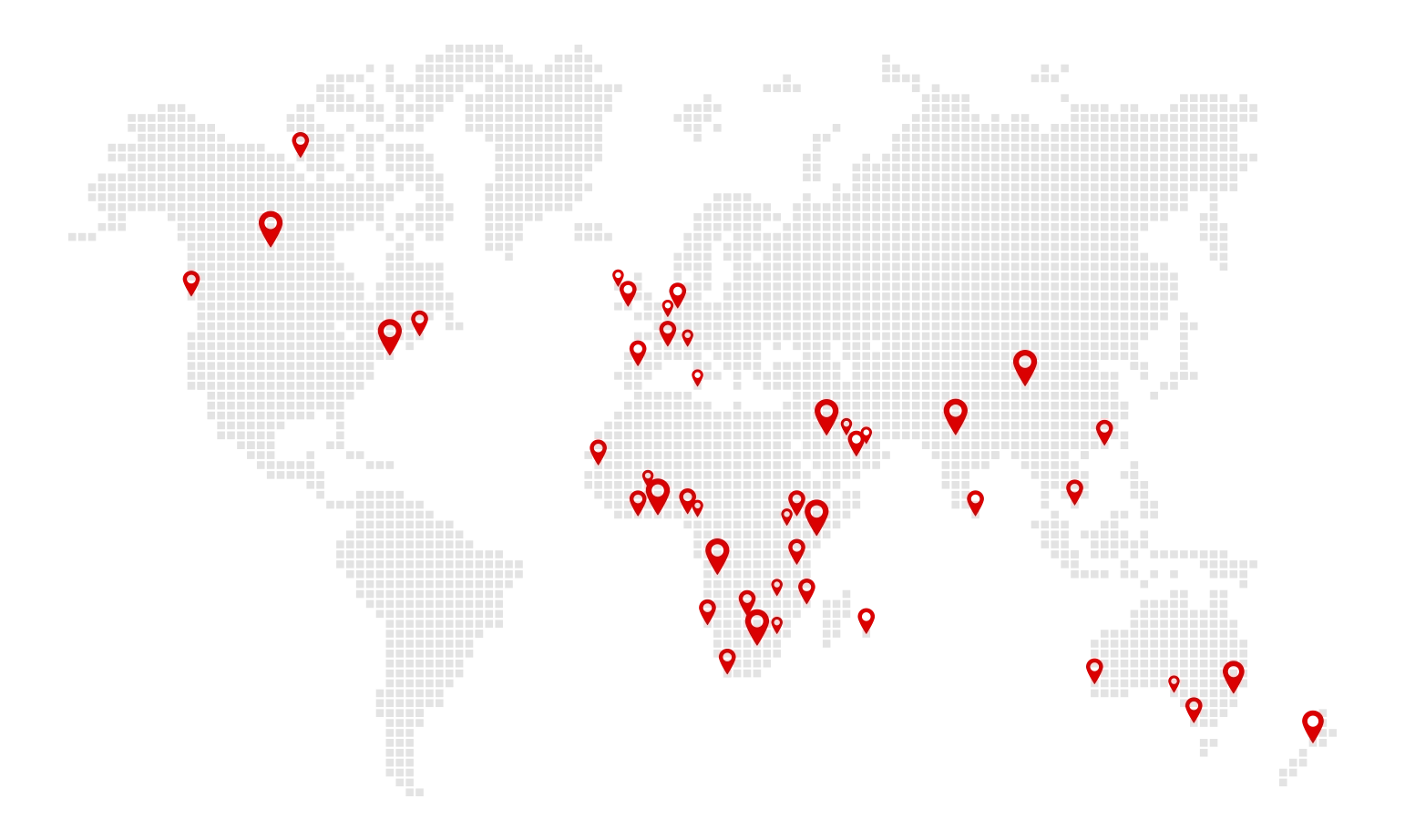



Australia Ghana Kenya Mauritius New Zealand Nigeria South Africa Tanzania
For more information contact us on info@sirdargroup.com
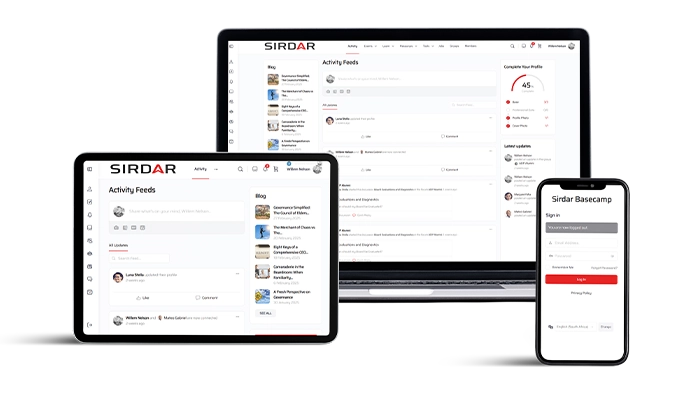
Sirdar Basecamp is the ultimate membership platform for boards and directors, designed to empower you with the tools, knowledge, and support you need to excel in governance. With Sirdar Basecamp, you gain access to expertly curated resources, practical frameworks, and a vibrant community of peers who are as dedicated to excellence as you are.

Enjoy optimal performance by leveraging our solutions to create meaningful economic impact. The result: satisfied shareholders, engaged employees, thriving communities and a better world for all.
Rely on us to support finding the ideal candidate who balances unique boardroom dynamics while bringing the required expertise, experience, values, and natural energy to deliver exceptional performance.
Gain critical insights and learnings from our relevant and practical training programmes and workshops that focus on building director- and board-level skills – all based on our robust methodology.
Navigating the complexities of statutory compliance is crucial for any business. Our comprehensive statutory compliance solutions simplify the process and cover every aspect of business administration.
Businesses that are experiencing growth encounter unique opportunities and challenges. Our solutions support ensuring good governance and best practices to take them further into the future.
Board training is key to remaining relevant and being a high-performing director. Our training and workshops are based on your specific and unique needs.
Stay future-ready by aligning today’s governance with tomorrow’s opportunities. Our case studies, job listings and blog help your board respond now and lead with foresight.
At the end of the day, directorship is about creating value and leading your organisation to success. The stakes are high, but you don’t have to do it alone. Reach out and gain a support system that empowers you to lead with confidence.


Cape Town
South Africa
+27 21 276 0540
Johannesburg
South Africa
+27 21 276 0540
Dar Es Salaam
Tanzania
+255 78 614 2424
Ebene
Mauritius
+230 463 7000
Accra
Ghana
+233 246 386 364
Nairobi
Kenya
+254 110 006 888
Wellington
New Zealand
+64 21 242 9383
Perth
Western Australia
+61 482 026 914
Lagos
Nigeria
+234 803 595 7198
Sirdar Basecamp is the ultimate membership platform for boards and directors, designed to empower you with the tools, knowledge, and support you need to excel in governance. With Sirdar Basecamp, you gain access to expertly curated resources, practical frameworks, and a vibrant community of peers who are as dedicated to excellence as you are.