
Family-owned businesses are the backbone of South Africa’s private sector. From multi-generational manufacturing groups in KwaZulu-Natal to fast-scaling family-led services firms in Gauteng and the Western Cape, family businesses carry the weight of legacy, livelihood, and local economic contribution. But the same qualities that make them resilient — close ownership, founder-led decision-making, family relationships at the core — can also become governance liabilities as the business scales, professionalises, or transitions to the next generation.
Family business governance in South Africa is not a defensive exercise. It is the structured framework that allows a family-owned business to keep its character while introducing the discipline, oversight, and accountability that capital partners, regulators, and the next generation expect. Done well, it protects family relationships and unlocks growth. Done poorly — or skipped — it becomes the reason promising South African family businesses stall, fragment, or fail at succession.
South African family businesses operate in a governance environment shaped by King IV, the Companies Act 71 of 2008, and an investor and regulatory ecosystem that increasingly treats governance maturity as a proxy for organisational quality. The pressure to formalise governance comes from several directions at once: lenders and DFIs ask harder questions before extending credit; B-BBEE partners want clarity on board composition and decision rights; the next generation wants a transparent path to influence and ownership; and family members in operational roles want to know where their authority ends and the board’s begins.
When governance is informal, every one of these pressures becomes a source of friction. When governance is well-designed, the same pressures become opportunities to strengthen the business and the family that owns it.
Family businesses in South Africa face tensions that purely management-led firms do not.
These tensions do not resolve themselves. They are resolved through governance architecture — a board, a family charter, decision rights, terms of reference for committees — that gives the family and the business a shared framework for handling complexity.
King IV is not mandatory for unlisted family businesses, but it is the South African governance reference point. Investors, partners, and increasingly auditors expect family business boards to be able to demonstrate alignment with King IV principles even where listing requirements do not apply.
For a family business board, the principles that bite hardest in practice are:
A family business does not need to copy a JSE-listed company’s governance structure to be King IV-aligned. It needs to be intentional about which principles apply, how they are applied, and how the family-specific dimensions are handled. That intentionality is what an external evaluation or readiness diagnostic surfaces.
Most South African family businesses do not begin with a board. They begin with the founder, joined gradually by family members and trusted advisors who meet informally. This works — until it does not. The signals that the maturity path needs to advance are usually clear in retrospect:
The path forward generally moves through three stages: an advisory board that meets formally and gives non-binding counsel; a constituted board with defined decision rights and fiduciary responsibility; and, eventually, a board with independent directors and committees that operates the way a King IV-aligned listed board would operate, even though the business is not listed.
Succession is the single most common reason South African family businesses commission governance work. The trigger is rarely abstract: it is a founder approaching retirement, a senior family member’s health event, or a generational shift forcing a long-overdue conversation about ownership and control.
Good family business governance answers succession questions before they become crises. Who chairs the board after the founder steps back? How are family directors selected, evaluated, and rotated? How does the family handle disagreement when it arises? How are B-BBEE partners and employee shareholders represented in decision-making? A family charter, supported by a board charter and clear delegation of authority, gives the family and the business a written framework for handling these questions in a way that protects relationships and protects value.
Sirdar works with South African family businesses across sectors — manufacturing, agriculture, services, professional firms — to build governance that fits the family, the business, and the regulatory environment. Engagements typically combine a governance readiness diagnostic, board composition work, and tailored support for charter and policy development. Where a family is moving toward a formal board, Sirdar helps clarify decision rights, plan independent director recruitment, and prepare for the discipline of a King IV-aligned governance cycle.
The objective is never governance for its own sake. It is governance that allows a South African family business to scale confidently, navigate succession, and stand up to investor and regulatory scrutiny — without losing the qualities that made it successful in the first place.
When does a family business need a formal board in South Africa?
There is no fixed revenue or headcount threshold. The trigger is usually complexity: the business has grown beyond what the founder can personally oversee, capital partners are asking governance questions, succession is approaching, or family members in operational roles need clearer boundaries. A board readiness diagnostic helps a family decide whether to formalise now or strengthen advisory structures first.
How does King IV apply to family-owned businesses?
King IV is voluntary for unlisted businesses, but its principles are increasingly the standard expected by investors, lenders, B-BBEE partners, and the next generation. A family business board does not need to mirror a JSE board structure; it needs to be intentional about which King IV principles apply, how they are implemented in a family context, and how family-specific risks are governed.
How does B-BBEE affect family business succession?
B-BBEE structures introduce new categories of stakeholders — empowerment partners, employee trusts, broad-based ownership vehicles — into the governance picture. Family business succession planning needs to integrate B-BBEE considerations from the start, including how empowerment partners are represented on the board, how decision rights are distributed, and how the family’s intent for the business is preserved alongside transformation outcomes.
Who should sit on a family business board: family, independents, or both?
The strongest family business boards combine family directors who carry the family’s intent and history, independent directors who bring external perspective and challenge, and (where applicable) executive directors who bring operational depth. The right balance depends on the size of the business, the stage of generational transition, and the governance demands of capital partners. The point is intentional design, not a fixed formula.
Mauritius
+230 463 7000
mauritius@sirdargroup.com
Level 8, Nexteracom Tower III, Rue du Savoir,
Cybercity, Ebene, 72201
Ghana
+233 246 386 364
ghana@sirdargroup.com
4th Floor, Stanbic Heights
215, North Liberation Road
Airport City, Accra
Kenya
+254 110 006 888
kenya@sirdargroup.com
1st Floor, Cornerstone Place,
23 St Michael’s Road (off Rhapta Road),
Muthangari, Nairobi
Western Australia
+61 482 026 914
australia@sirdargroup.com
Perth
New Zealand
+64 21 242 9383
newzealand@sirdargroup.com
Wellington
Nigeria
+234 803 595 7198
nigeria@sirdargroup.com
1 Walter Carrington Crescent,
Victoria Island, Lagos, Nigeria
















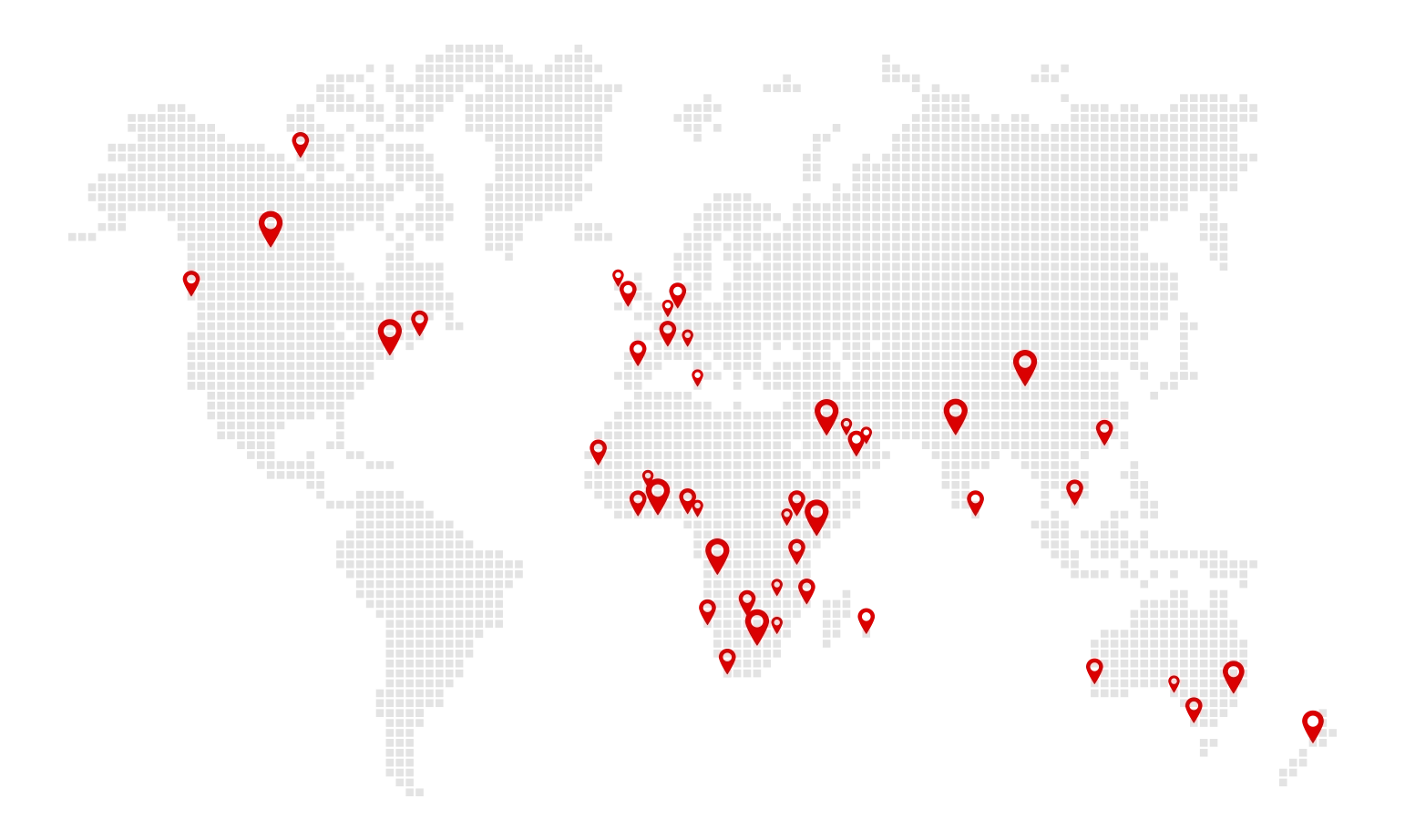



Australia Ghana Kenya Mauritius New Zealand Nigeria South Africa Tanzania
For more information contact us on info@sirdargroup.com
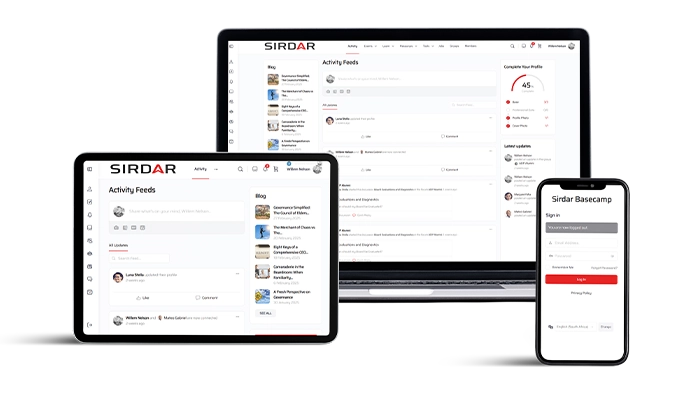
Sirdar Basecamp is the ultimate membership platform for boards and directors, designed to empower you with the tools, knowledge, and support you need to excel in governance. With Sirdar Basecamp, you gain access to expertly curated resources, practical frameworks, and a vibrant community of peers who are as dedicated to excellence as you are.

Enjoy optimal performance by leveraging our solutions to create meaningful economic impact. The result: satisfied shareholders, engaged employees, thriving communities and a better world for all.
Rely on us to support finding the ideal candidate who balances unique boardroom dynamics while bringing the required expertise, experience, values, and natural energy to deliver exceptional performance.
Gain critical insights and learnings from our relevant and practical training programmes and workshops that focus on building director- and board-level skills – all based on our robust methodology.
Navigating the complexities of statutory compliance is crucial for any business. Our comprehensive statutory compliance solutions simplify the process and cover every aspect of business administration.
Businesses that are experiencing growth encounter unique opportunities and challenges. Our solutions support ensuring good governance and best practices to take them further into the future.
Board training is key to remaining relevant and being a high-performing director. Our training and workshops are based on your specific and unique needs.
Stay future-ready by aligning today’s governance with tomorrow’s opportunities. Our case studies, job listings and blog help your board respond now and lead with foresight.
At the end of the day, directorship is about creating value and leading your organisation to success. The stakes are high, but you don’t have to do it alone. Reach out and gain a support system that empowers you to lead with confidence.


Cape Town
South Africa
+27 21 276 0540
Johannesburg
South Africa
+27 21 276 0540
Dar Es Salaam
Tanzania
+255 78 614 2424
Ebene
Mauritius
+230 463 7000
Accra
Ghana
+233 246 386 364
Nairobi
Kenya
+254 110 006 888
Wellington
New Zealand
+64 21 242 9383
Perth
Western Australia
+61 482 026 914
Lagos
Nigeria
+234 803 595 7198
Sirdar Basecamp is the ultimate membership platform for boards and directors, designed to empower you with the tools, knowledge, and support you need to excel in governance. With Sirdar Basecamp, you gain access to expertly curated resources, practical frameworks, and a vibrant community of peers who are as dedicated to excellence as you are.