Every board evaluation relies on two core data collection methods: online questionnaires (structured feedback) and interviews (one-on-one conversations). Each has strengths and limitations. Together, they create a complete picture—the structure of questionnaires combined with the narrative depth of interviews.
Questionnaires provide standardised questions, consistent data, numerical scoring. This enables benchmarking: ‘Our board scores 6.8 on strategy engagement, compared to best-practice benchmark of 7.5.’ That structure is valuable, allowing aggregation and clear scoring on dimensions like board effectiveness and committee performance.
But questionnaires capture what people are willing to write down—often sanitised. Directors self-censor. Controversial opinions get softened. Interpersonal tensions are glossed over. A questionnaire might score the chair as ‘7/10’ but the narrative behind that (‘She dominates discussion and my contribution doesn’t feel valued’) is lost.
Directors also hold back in writing. It feels permanent, traceable, vulnerable. Even in confidential questionnaires, people modulate honesty. Strong opinions become mild suggestions. Concerns become diplomatic observations.
Interviews create space for nuance. A skilled interviewer explores beneath the surface: ‘You scored strategy engagement as 6—tell me more. What would a 9 look like?’ Conversations reveal context, examples, and logic. One-on-one, confidential, with an external person—people are more honest.
But interviews are inherently anecdotal. How do you compare across directors? If director A says ‘our strategy engagement is weak’ and director B says ‘it’s strong’, how do you synthesise that? Without structure, you risk cherry-picking quotes. Interviews also create interviewer bias—different people interpret answers differently.
And interviews give you stories without context. You don’t know if ‘our board could be more strategic’ is a minor gap or major one without some benchmark.
Questionnaires establish what’s consistent. They tell you: ‘Overall, the board scores 6.8 on strategy engagement, consistent across 4 of 5 directors; only one scored it 9.’ That consistency is data—the issue is real, not one person’s perception. You also see where there’s disagreement: directors agree on committee effectiveness but split on chair effectiveness. That split is a clue to explore in interviews.
Once you know the baseline, interviews explore why. ‘The board scores 6.8 on strategy engagement. Tell me what that means.’ The response reveals: ‘We get quarterly updates, but we don’t challenge assumptions. We ask clarifying questions, not testing questions. We’re not stretching thinking.’ That narrative explains the number.
If one director says ‘I don’t feel heard’, you might dismiss it as personality. But if questionnaires show that director consistently scoring lower on ‘my contribution is valued’, you know it’s a real dynamic.
Questionnaires show patterns; interviews explain them. Risk committee effectiveness scores are lower than audit committee—why? Because ‘the risk committee chair is good with finance but doesn’t understand operational risk.’ That context is essential for recommendations.
Questions map to core governance dimensions: strategy engagement, board composition, committee effectiveness, risk governance, board dynamics, chair effectiveness. Questions are customised to your context, strategy, and risks—they are not generic. We mix scaled questions (enabling comparison) with open-ended questions (enabling narrative). Numerical scores are anonymous, enabling honest assessment without attribution fears.
Interviews are confidential, one-on-one, with no recording or shared notes (unless consent given). They are structured but conversational—there’s a question framework ensuring consistency, but format is dialogue, not interrogation. An external person conducts interviews, removing power dynamics. Interviews explore questionnaire responses in depth and combine individual contribution with collective dynamics questions.
Questionnaire scores are aggregated and patterns identified. Interviews are coded and themes categorised. The evaluator cross-validates: does interview narrative match questionnaire data? Causality analysis helps explain questionnaire patterns. Finally, everything synthesises into narrative and recommendations: ‘Here are your strengths, your challenges, why, and what to change.’
The value depends on response quality. If directors rush questionnaires or hold back candour, the data is weak. Directors need to understand evaluation purpose and that honest feedback is essential. The evaluator needs credibility and external positioning. Questions need clarity. And there needs to be psychological safety—will feedback damage relationships? If directors think so, they’ll self-censor.
Are questionnaire responses anonymous?
Yes. Questionnaire responses are submitted anonymously—no identification. This encourages honesty. Open-ended comments may be identifiable to the evaluator but are anonymised in the report. Interview content is confidential; directors can choose attribution if they want.
How long does the questionnaire take?
Typically 30–45 minutes to complete thoughtfully. Sirdar questionnaires are dense with insight but efficient on time. Complete in one sitting, in a quiet space, without interruption.
What if a director refuses to participate?
Non-participation is a problem. The evaluation loses richness without all voices. Most boards frame evaluation as mandatory participation—part of board membership. Refusal is often a sign of deeper issue (disengagement, distrust, something to hide) that the board needs to address.
Can we add our own questions?
Sometimes. Sirdar can add contextual questions specific to your priorities. But balance is needed—too many custom questions dilutes the standard framework and reduces comparability. Talk to your evaluator about what matters most.
Mauritius
+230 463 7000
mauritius@sirdargroup.com
Level 8, Nexteracom Tower III, Rue du Savoir,
Cybercity, Ebene, 72201
Ghana
+233 246 386 364
ghana@sirdargroup.com
4th Floor, Stanbic Heights
215, North Liberation Road
Airport City, Accra
Kenya
+254 110 006 888
kenya@sirdargroup.com
1st Floor, Cornerstone Place,
23 St Michael’s Road (off Rhapta Road),
Muthangari, Nairobi
Western Australia
+61 482 026 914
australia@sirdargroup.com
Perth
New Zealand
+64 21 242 9383
newzealand@sirdargroup.com
Wellington
Nigeria
+234 803 595 7198
nigeria@sirdargroup.com
1 Walter Carrington Crescent,
Victoria Island, Lagos, Nigeria
















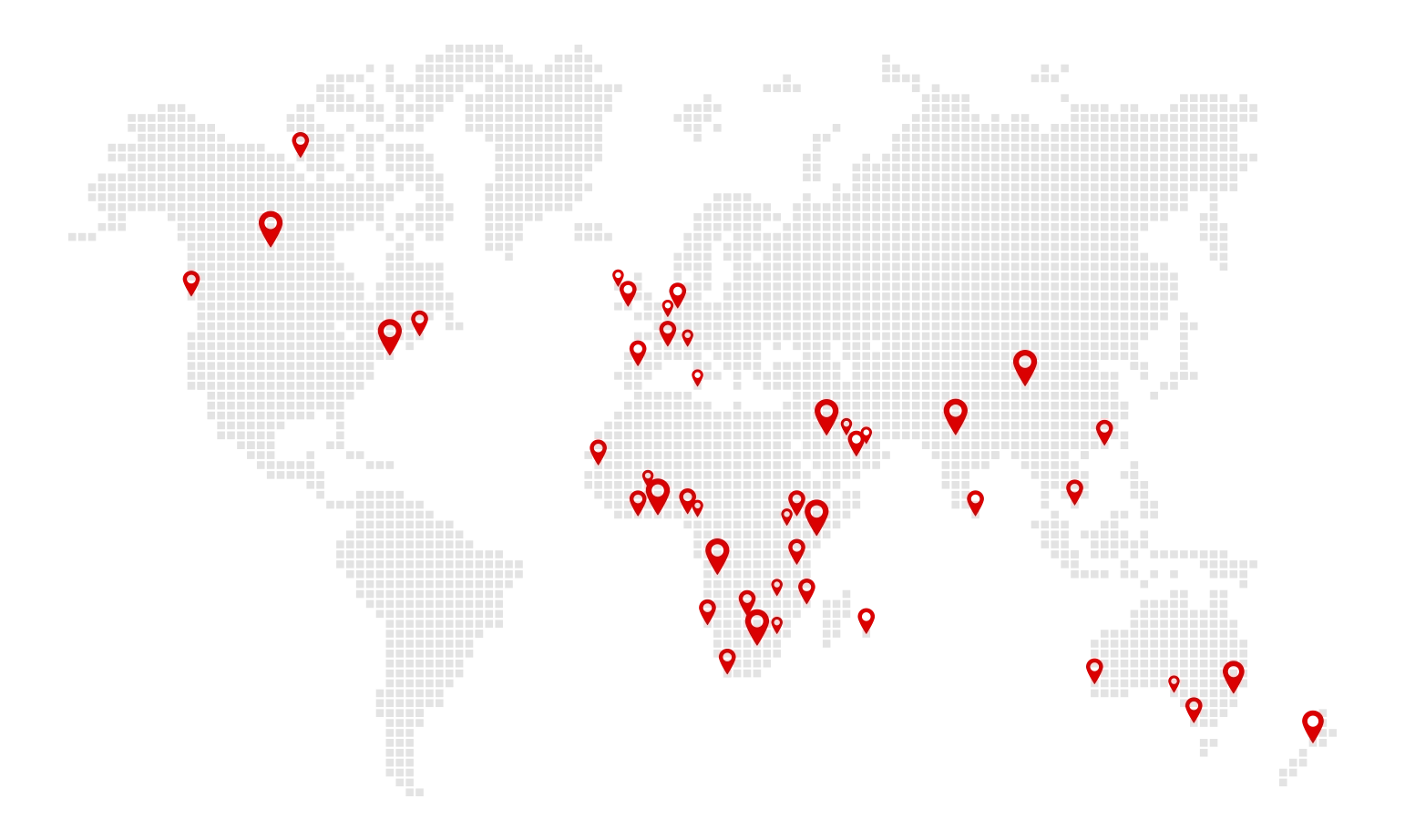



Australia Ghana Kenya Mauritius New Zealand Nigeria South Africa Tanzania
For more information contact us on info@sirdargroup.com
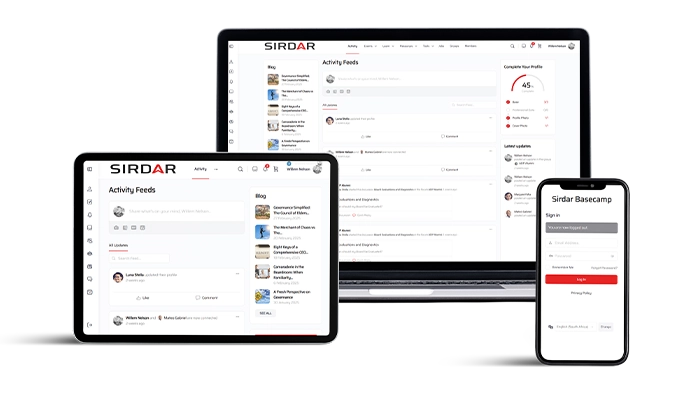
Sirdar Basecamp is the ultimate membership platform for boards and directors, designed to empower you with the tools, knowledge, and support you need to excel in governance. With Sirdar Basecamp, you gain access to expertly curated resources, practical frameworks, and a vibrant community of peers who are as dedicated to excellence as you are.

Enjoy optimal performance by leveraging our solutions to create meaningful economic impact. The result: satisfied shareholders, engaged employees, thriving communities and a better world for all.
Rely on us to support finding the ideal candidate who balances unique boardroom dynamics while bringing the required expertise, experience, values, and natural energy to deliver exceptional performance.
Gain critical insights and learnings from our relevant and practical training programmes and workshops that focus on building director- and board-level skills – all based on our robust methodology.
Navigating the complexities of statutory compliance is crucial for any business. Our comprehensive statutory compliance solutions simplify the process and cover every aspect of business administration.
Businesses that are experiencing growth encounter unique opportunities and challenges. Our solutions support ensuring good governance and best practices to take them further into the future.
Board training is key to remaining relevant and being a high-performing director. Our training and workshops are based on your specific and unique needs.
Stay future-ready by aligning today’s governance with tomorrow’s opportunities. Our case studies, job listings and blog help your board respond now and lead with foresight.
At the end of the day, directorship is about creating value and leading your organisation to success. The stakes are high, but you don’t have to do it alone. Reach out and gain a support system that empowers you to lead with confidence.


Cape Town
South Africa
+27 21 276 0540
Johannesburg
South Africa
+27 21 276 0540
Dar Es Salaam
Tanzania
+255 78 614 2424
Ebene
Mauritius
+230 463 7000
Accra
Ghana
+233 246 386 364
Nairobi
Kenya
+254 110 006 888
Wellington
New Zealand
+64 21 242 9383
Perth
Western Australia
+61 482 026 914
Lagos
Nigeria
+234 803 595 7198
Sirdar Basecamp is the ultimate membership platform for boards and directors, designed to empower you with the tools, knowledge, and support you need to excel in governance. With Sirdar Basecamp, you gain access to expertly curated resources, practical frameworks, and a vibrant community of peers who are as dedicated to excellence as you are.