
Apex Cordset faced governance challenges during a period of significant business disruption. Leadership transition, market pressure, and operational restructuring were happening simultaneously—the kind of complex, overlapping challenges that test governance structures severely.
In crisis periods, governance often becomes either paralysed or reactive. The board needs to make high-stakes decisions with incomplete information. Internal dynamics become strained. Existing governance structures, designed for stability, aren’t equipped for the speed and uncertainty of crisis decision-making.
Sirdar’s engagement with Apex focused on governance resilience—not just surviving the immediate crisis, but building governance structures that could sustain the board’s function and decision quality under sustained pressure. This required both diagnostic work (understanding current governance capacity) and practical support (helping the board navigate the crisis period itself).
The evaluation revealed that Apex’s governance framework was adequate for business-as-usual operations but lacked mechanisms for crisis-mode decision-making. The board charter and Terms of Reference existed but hadn’t been updated to reflect the business’s changed circumstances. Risk escalation pathways were unclear. Decision rights that worked in stable times created bottlenecks in volatile periods. Board communication was ad hoc rather than structured. The governance fundamentals—the documentation and frameworks that normally provide continuity—hadn’t been maintained.
The outcome included a governance framework adapted specifically for crisis and transition periods. This meant building in mechanisms for accelerated decision-making (when do decisions need to move at week-level or day-level pace?), clearer escalation and decision rights (what gets decided by the board versus what can be delegated to management?), board stability during a volatile period (how do we maintain focus and trust despite pressure?), and a governance roadmap for the post-transition phase (what governance maturation does the business need once crisis resolves?).
Importantly, the engagement revealed a deeper lesson: governance resilience is built before the crisis, not during it. Apex’s challenge was partly that governance fundamentals hadn’t been maintained during periods of stability. Regular board evaluation, updated governance documentation, clarity on decision frameworks—these are the foundation that allows a board to function effectively when disruption arrives.
The engagement also highlighted the distinction between governing in crisis and governing through crisis. Crisis governance might require different decision rhythms, clearer escalation, tighter focus. But it still requires governance—clarity on decision authority, accountability, and continuity. Boards that abandon governance during crisis often find themselves managing both the business crisis and a governance crisis.
Crisis often requires faster decision cycles, tighter information flow, clearer escalation paths, and sometimes shift in decision authority (more to board, less to committee structure). However, the fundamentals—clarity on who decides what, accountability for decisions, documented decision rationale—become more important, not less. Governance shouldn’t disappear in crisis; it should adapt to crisis rhythm.
Trust in crisis is built on transparency (sharing what’s known and what’s uncertain), consistency (decision-making following clear principles), and clarity (everyone understanding their role and what’s being decided). Governance frameworks support this by providing structure and clarity even when circumstances are volatile.
Maintained governance fundamentals: board charter and ToR that reflect current circumstances, regular board evaluation that catches emerging issues, clarity on decision rights and escalation, and board development that helps directors think strategically even under pressure. These foundations allow a board to adapt quickly rather than starting from governance basics during crisis.
Mauritius
+230 463 7000
mauritius@sirdargroup.com
Level 8, Nexteracom Tower III, Rue du Savoir,
Cybercity, Ebene, 72201
Ghana
+233 246 386 364
ghana@sirdargroup.com
4th Floor, Stanbic Heights
215, North Liberation Road
Airport City, Accra
Kenya
+254 110 006 888
kenya@sirdargroup.com
1st Floor, Cornerstone Place,
23 St Michael’s Road (off Rhapta Road),
Muthangari, Nairobi
Western Australia
+61 482 026 914
australia@sirdargroup.com
Perth
New Zealand
+64 21 242 9383
newzealand@sirdargroup.com
Wellington
Nigeria
+234 803 595 7198
nigeria@sirdargroup.com
1 Walter Carrington Crescent,
Victoria Island, Lagos, Nigeria
















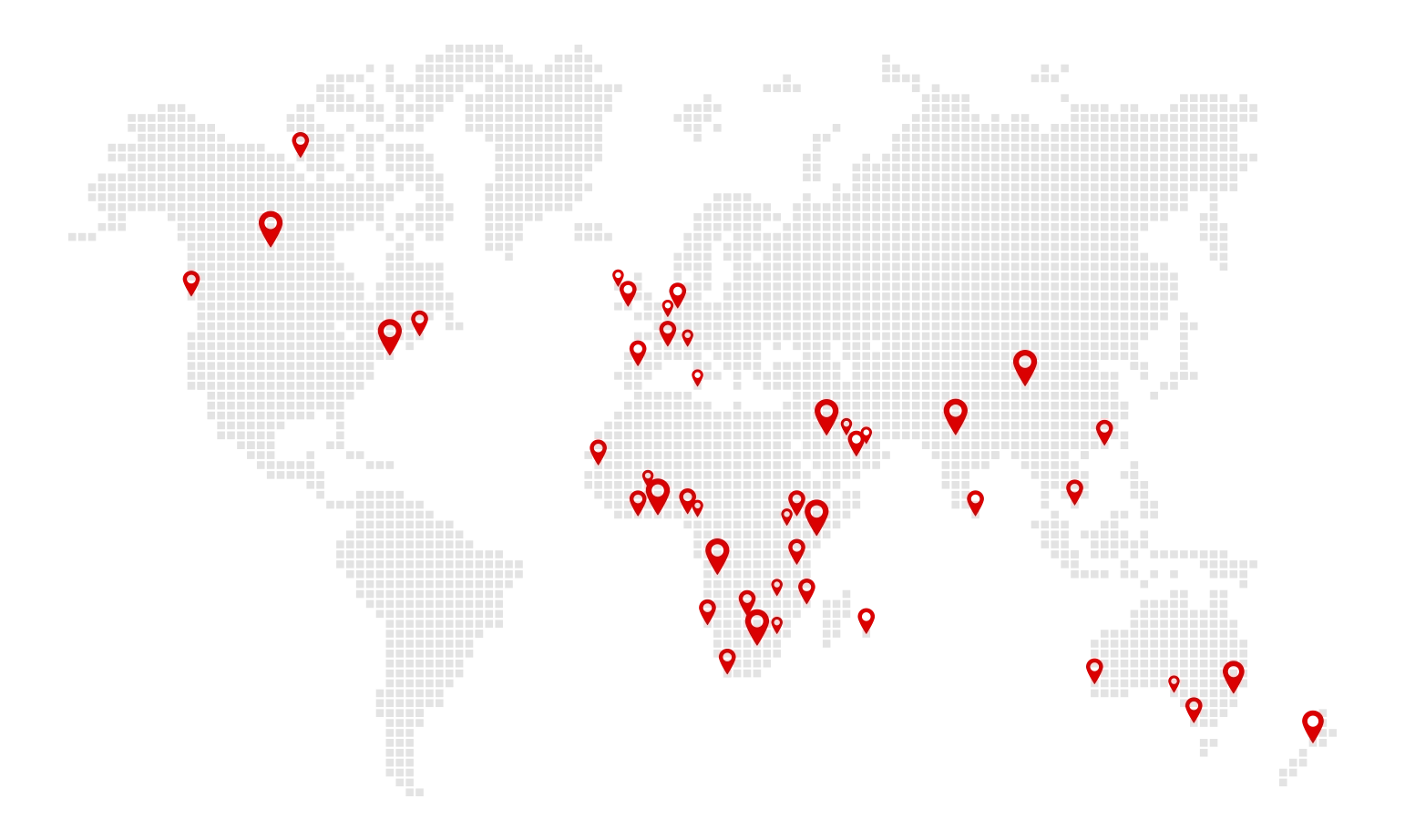



Australia Ghana Kenya Mauritius New Zealand Nigeria South Africa Tanzania
For more information contact us on info@sirdargroup.com
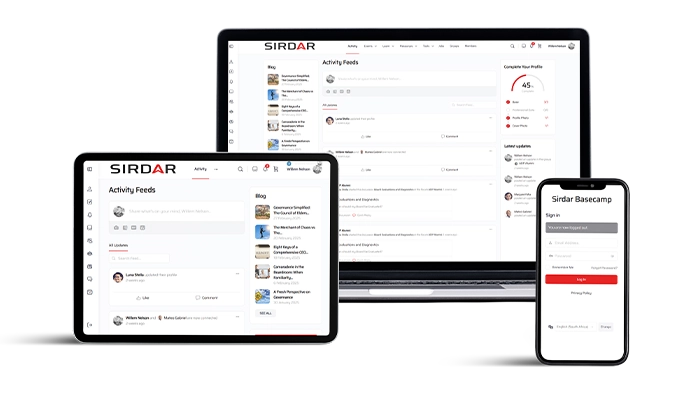
Sirdar Basecamp is the ultimate membership platform for boards and directors, designed to empower you with the tools, knowledge, and support you need to excel in governance. With Sirdar Basecamp, you gain access to expertly curated resources, practical frameworks, and a vibrant community of peers who are as dedicated to excellence as you are.

Enjoy optimal performance by leveraging our solutions to create meaningful economic impact. The result: satisfied shareholders, engaged employees, thriving communities and a better world for all.
Rely on us to support finding the ideal candidate who balances unique boardroom dynamics while bringing the required expertise, experience, values, and natural energy to deliver exceptional performance.
Gain critical insights and learnings from our relevant and practical training programmes and workshops that focus on building director- and board-level skills – all based on our robust methodology.
Navigating the complexities of statutory compliance is crucial for any business. Our comprehensive statutory compliance solutions simplify the process and cover every aspect of business administration.
Businesses that are experiencing growth encounter unique opportunities and challenges. Our solutions support ensuring good governance and best practices to take them further into the future.
Board training is key to remaining relevant and being a high-performing director. Our training and workshops are based on your specific and unique needs.
Stay future-ready by aligning today’s governance with tomorrow’s opportunities. Our case studies, job listings and blog help your board respond now and lead with foresight.
At the end of the day, directorship is about creating value and leading your organisation to success. The stakes are high, but you don’t have to do it alone. Reach out and gain a support system that empowers you to lead with confidence.


Cape Town
South Africa
+27 21 276 0540
Johannesburg
South Africa
+27 21 276 0540
Dar Es Salaam
Tanzania
+255 78 614 2424
Ebene
Mauritius
+230 463 7000
Accra
Ghana
+233 246 386 364
Nairobi
Kenya
+254 110 006 888
Wellington
New Zealand
+64 21 242 9383
Perth
Western Australia
+61 482 026 914
Lagos
Nigeria
+234 803 595 7198
Sirdar Basecamp is the ultimate membership platform for boards and directors, designed to empower you with the tools, knowledge, and support you need to excel in governance. With Sirdar Basecamp, you gain access to expertly curated resources, practical frameworks, and a vibrant community of peers who are as dedicated to excellence as you are.