Investors assess governance before they invest. It’s not optional—it’s foundational due diligence. Whether you’re raising venture capital, approaching strategic buyers, seeking development finance, or attracting PE investment, investors evaluate governance as a proxy for decision quality, risk management, and organizational sustainability. Weak governance signals weak decisions. Strong governance signals that your business can be scaled and is a safer investment.
Board Composition and Independence: Do you have a board? If yes, what’s the composition? Are directors independent or founder-appointed? Is the chair independent? Investors worry that founder-controlled boards make founder-serving decisions, not shareholder-serving ones.
Decision-Making Frameworks: How are major decisions made? Is there a documented process for capital deployment, acquisition, market entry, vendor selection? Or does decision-making rely on founder intuition? Clear frameworks signal discipline.
Risk Oversight Discipline: Who oversees risk—capital risk, operational risk, market risk, compliance risk? Has the board identified and monitored material risks? Or has the business stumbled into regulatory breaches or customer disputes that a competent board would have anticipated?
Financial Governance and Reporting Quality: Can management produce timely, accurate financial reports? Does the board receive monthly management accounts? Is there clear responsibility for financial controls? Investors read financial statements; weak reporting is a red flag.
Succession Planning: What happens if the founder or CEO leaves? Is there documented succession planning for key roles? Or does the entire business depend on one person? Investors worry about single-person dependency.
Committee Structures: For larger investments, investors expect formal audit and risk committees. Even early-stage businesses should have some oversight structure—even if it’s an external adviser rather than a formal committee.
A prospective investor requests governance documents during due diligence. You don’t have formal ToRs for your advisory board. Your decision-making is undocumented. Your financial reporting is late and inaccurate. Your founder has executed major agreements without board visibility. You have no succession plan. Every one of these findings creates risk in the investor’s mind. They may still invest—but at a lower valuation, with more restrictive terms, or with increased governance oversight post-investment.
The inverse is equally true. An investor encounters: documented governance structure, clear decision frameworks, strong financial reporting, risk oversight discipline, documented succession planning, external advisers or board members, compliance with King IV or equivalent framework. These signals reduce investment risk and increase confidence in management capability. Premium valuations flow from premium confidence.
Before you go to market, a board performance diagnostic can identify: (1) Gaps that would surface during investor due diligence – giving you time to fix them, (2) Quick wins – governance improvements (board formation, ToR documentation, financial reporting upgrades) that strengthen your positioning with minimal cost, (3) A credible governance narrative – for your investor data room, your executive summaries, and investor conversations. Instead of saying “we have informal governance,” you say “we have a structured advisory board, clear decision frameworks, and are moving to formal board as we scale.”
South African investors—particularly DFIs (DEV, IFC, BLSA-member institutions) and PE firms—explicitly assess governance against BEE codes and King IV principles. Black Economic Empowerment scorecards often include governance and preferential procurement criteria. JSE listing requirements set out specific board and committee expectations. Strategic buyers evaluate King IV compliance as a proxy for enterprise quality. Non-compliance or weak governance significantly impacts your investment readiness and exit value.
1. How early should we prepare governance for investment?
As soon as you’re serious about raising capital—ideally 6–12 months before you approach investors. This gives you time to fix gaps without appearing to be racing against a deadline. If you’re raising capital in 90 days, a quick governance diagnostic will highlight the most critical issues.
2. Can governance improvements increase our valuation?
Indirectly yes. Strong governance reduces investment risk and increases investor confidence. If two similar businesses are on the market and one has strong governance and one doesn’t, the strong-governance business attracts more investors and higher bidding. You might not see a direct “valuation premium for good governance,” but you’ll see faster capital raise and less restrictive terms.
3. What governance documents do investors expect to see?
Board composition, board charter or terms of reference, committee ToRs (if committees exist), delegation of authority, conflict of interest policies, director appointment processes, financial controls framework, succession planning documentation. For larger raises or PE/VC investment, add audit and risk committee ToRs, compliance register, and external audit reports.
4. Do we need a formal board before raising capital?
Not always. Early-stage investment (angel, seed, small VC rounds) might accept an advisory board structure. Growth-stage or institutional investment (PE, DFI, strategic) typically expects a formal board with directors and fiduciary duties. Sirdar can help you calibrate what’s expected for your investor type.
Mauritius
+230 463 7000
mauritius@sirdargroup.com
Level 8, Nexteracom Tower III, Rue du Savoir,
Cybercity, Ebene, 72201
Ghana
+233 246 386 364
ghana@sirdargroup.com
4th Floor, Stanbic Heights
215, North Liberation Road
Airport City, Accra
Kenya
+254 110 006 888
kenya@sirdargroup.com
1st Floor, Cornerstone Place,
23 St Michael’s Road (off Rhapta Road),
Muthangari, Nairobi
Western Australia
+61 482 026 914
australia@sirdargroup.com
Perth
New Zealand
+64 21 242 9383
newzealand@sirdargroup.com
Wellington
Nigeria
+234 803 595 7198
nigeria@sirdargroup.com
1 Walter Carrington Crescent,
Victoria Island, Lagos, Nigeria














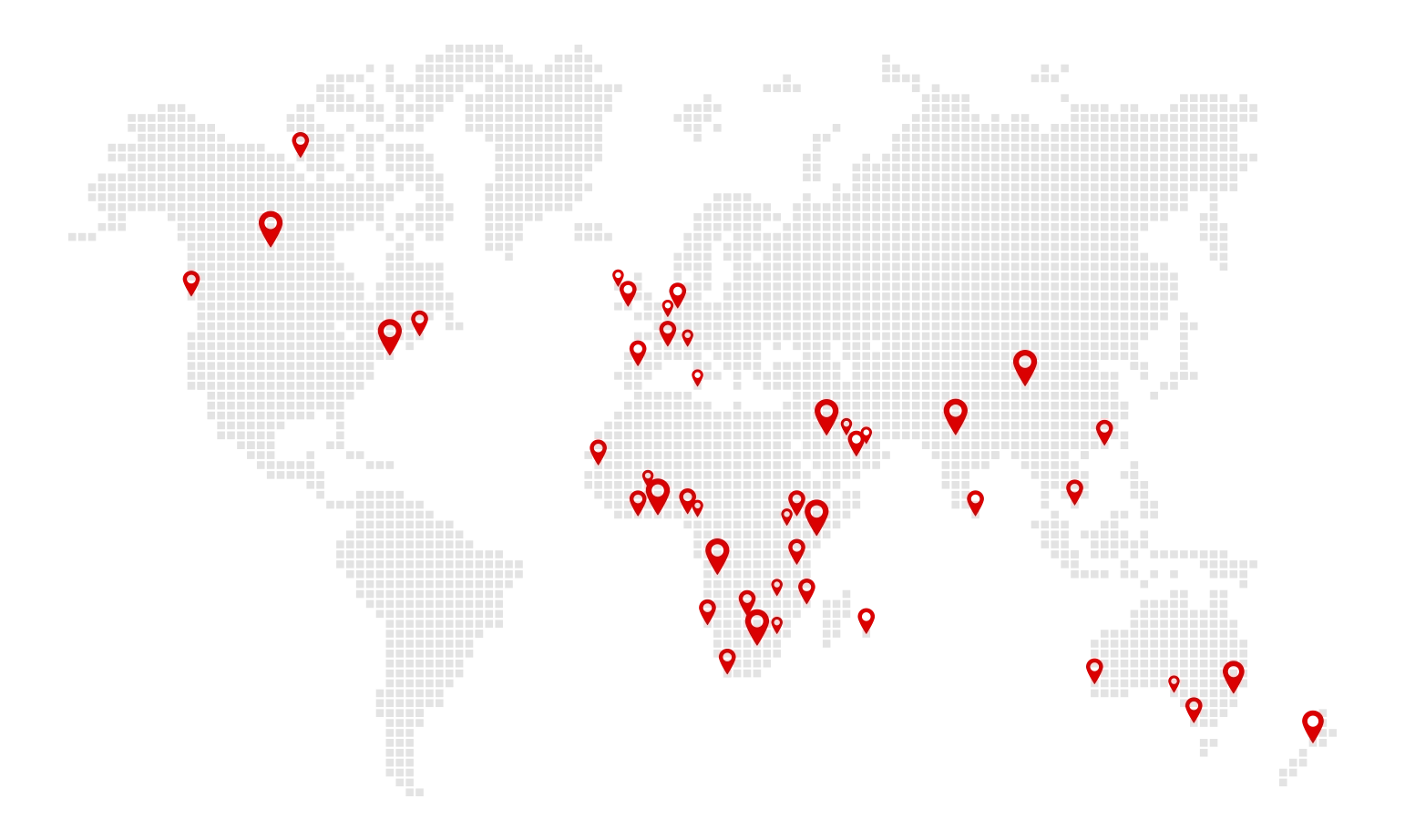



Australia Ghana Kenya Mauritius New Zealand Nigeria South Africa Tanzania
For more information contact us on info@sirdargroup.com
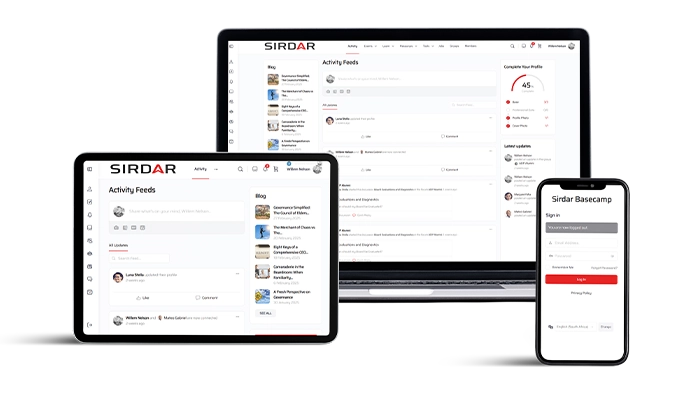
Sirdar Basecamp is the ultimate membership platform for boards and directors, designed to empower you with the tools, knowledge, and support you need to excel in governance. With Sirdar Basecamp, you gain access to expertly curated resources, practical frameworks, and a vibrant community of peers who are as dedicated to excellence as you are.

Enjoy optimal performance by leveraging our solutions to create meaningful economic impact. The result: satisfied shareholders, engaged employees, thriving communities and a better world for all.
Rely on us to support finding the ideal candidate who balances unique boardroom dynamics while bringing the required expertise, experience, values, and natural energy to deliver exceptional performance.
Gain critical insights and learnings from our relevant and practical training programmes and workshops that focus on building director- and board-level skills – all based on our robust methodology.
Navigating the complexities of statutory compliance is crucial for any business. Our comprehensive statutory compliance solutions simplify the process and cover every aspect of business administration.
Businesses that are experiencing growth encounter unique opportunities and challenges. Our solutions support ensuring good governance and best practices to take them further into the future.
Board training is key to remaining relevant and being a high-performing director. Our training and workshops are based on your specific and unique needs.
Stay future-ready by aligning today’s governance with tomorrow’s opportunities. Our case studies, job listings and blog help your board respond now and lead with foresight.
At the end of the day, directorship is about creating value and leading your organisation to success. The stakes are high, but you don’t have to do it alone. Reach out and gain a support system that empowers you to lead with confidence.


Cape Town
South Africa
+27 21 276 0540
Johannesburg
South Africa
+27 21 276 0540
Dar Es Salaam
Tanzania
+255 78 614 2424
Ebene
Mauritius
+230 463 7000
Accra
Ghana
+233 246 386 364
Nairobi
Kenya
+254 110 006 888
Wellington
New Zealand
+64 21 242 9383
Perth
Western Australia
+61 482 026 914
Lagos
Nigeria
+234 803 595 7198
Sirdar Basecamp is the ultimate membership platform for boards and directors, designed to empower you with the tools, knowledge, and support you need to excel in governance. With Sirdar Basecamp, you gain access to expertly curated resources, practical frameworks, and a vibrant community of peers who are as dedicated to excellence as you are.